Browsed by
Tag: Sunday Reflection

Makanan untuk Kehidupan Kekal

Makanan untuk Kehidupan Kekal

Minggu Biasa ke-18 [B]
1 Agustus 2021
Yohanes 6:24-35

Banyak orang mencari Yesus karena mereka ingin makan roti lebih banyak, mereka berharap perut mereka kenyang. Namun, Yesus mengingatkan mereka agar mereka tidak mencari makanan yang dapat binasa, melainkan makanan yang bertahan untuk hidup yang kekal. Sayangnya, mereka gagal untuk paham. Mereka mengira makanan yang Yesus beri seperti manna Perjanjian Lama yang terus-menerus diberikan kepada orang Israel di padang gurun selama empat puluh tahun. Mereka mengira bahwa akan ada roti bagi mereka setiap hari secara cuma-cuma. Perut mereka selalu terisi dan mereka selalu dijauhkan dari penderitaan. Namun, ini bukanlah roti yang Yesus tawarkan.

Kembali ke Perjanjian Lama, kita mendengarkan kisah orang Israel yang mengeluh karena lapar. Namun, hanya beberapa jam sebelumnya, mereka baru saja menyaksikan bagaimana Tuhan melalui Musa membelah laut merah dan menghancurkan kekuatan besar Mesir. Mereka tahu betul bagaimana Tuhan membuat orang Mesir bertekuk lutut dengan 10 tulah. Namun, ketika perut mereka kosong, mereka melupakan semua ini, dan menuntut kembali ke tanah perbudakan. Mereka bahkan menuduh Tuhan merencanakan kematian mereka di padang gurun. Dalam hal naluri bertahan hidup, orang Israel terlalu bersemangat untuk memilih perbudakan, daripada tetap setia kepada Tuhan kemerdekaan.

Yesus mengingatkan kita bahwa hidup ini lebih dari sekadar mengisi perut kita. Memang, makan dan memelihara tubuh kita adalah hal yang sangat penting, tetapi bahkan makanan fisik ini juga berasal dari pemeliharaan Tuhan. Seringkali, kita terlalu sibuk mencari roti duniawi dalam berbagai bentuknya, karier yang sukses, pengaruh politik, ketenaran, dan kekayaan. Kami mencari hal-hal ini sampai kami bersedia kembali ke perbudakan dosa, dan meninggalkan Tuhan kebebasan.

Saat pandemi ini, kita mungkin menemukan diri kita berada di posisi orang Israel. Beberapa dari kita lapar karena kita baru saja kehilangan stabilitas ekonomi kita. Beberapa dari kita sedang berjuang melawan penyakit. Beberapa dari kita kehilangan anggota keluarga tercinta. Beberapa dari kita tidak dapat melakukan apa yang dulu suka dilakukan. Beberapa dari kita tidak dapat pergi ke Gereja dan melakukan pelayanan kita. Dalam kebutuhan yang mendesak ini, kita menghadapi godaan untuk mengeluh kepada Tuhan. Kita mungkin kecewa dan marah kepada Tuhan. Kita lebih siap untuk meninggalkan Tuhan. Kita dengan mudah melupakan perbuatan-perbuatan besar yang Tuhan telah lakukan dalam hidup kita. Seperti nenek moyang kita, orang Israel, kita tenggelam dalam penderitaan kita, dan menyalahkan Tuhan atas kemalangan kita. Kita melupakan Tuhan kita yang membiarkan penderitaan ini adalah Tuhan yang mengendalikan kekuatan alam.

Mari kita belajar dari orang-orang kudus. Ignatius dari Loyola adalah salah satu contoh yang sangat baik. Dia dulunya adalah seorang pria yang haus akan kemuliaan duniawi. Bahkan, dia mempertaruhkan nyawanya hanya untuk membuktikan kegagahannya dalam mempertahankan benteng Pamplona. Namun, ketika kakinya terluka parah, dan menjadi pincang secara permanen, ambisinya hancur. Namun, pada saat yang sama, dia membaca kehidupan Kristus dan orang-orang kudus, dan dia menyadari bahwa kemuliaan yang lebih besar yang tidak dapat ditawarkan dunia. Jalan keagungan yang sebenarnya adalah bekerja untuk kemuliaan Tuhan yang lebih besar. Dia meninggalkan segalanya dan bekerja untuk makanan yang tidak akan binasa. Akhirnya, dia berakhir sebagai santo.

Valentinus Bayuhadi Ruseno, OP
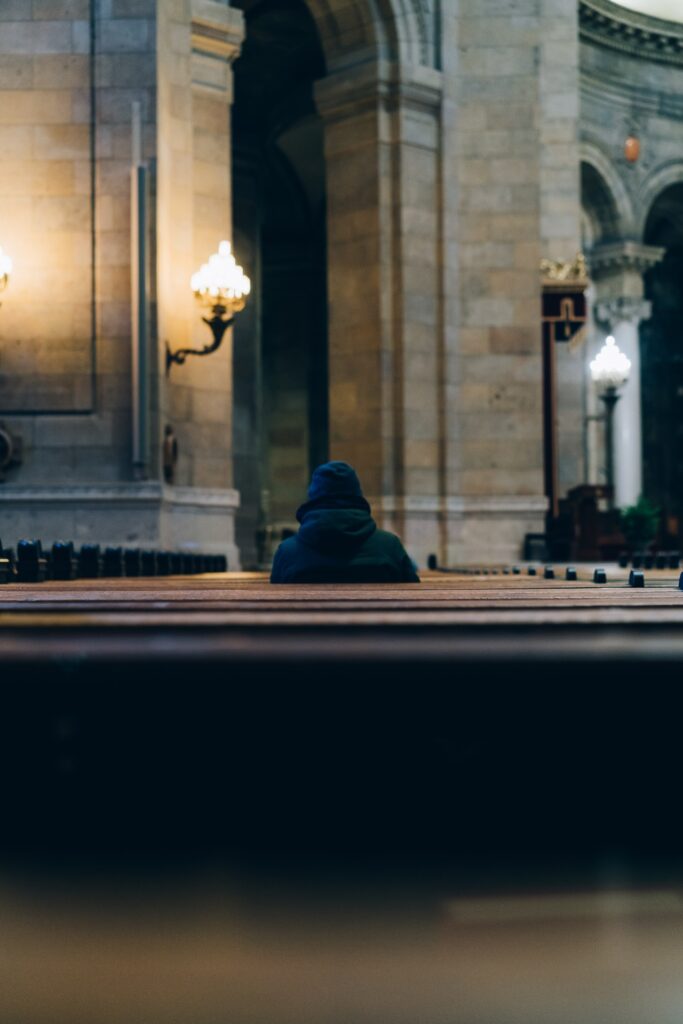
True Rest

True Rest

16th Sunday in Ordinary Time [B]
July 18, 2021
Mark 6:30-34

Last week, we listened to the stories of Jesus sending His disciples. This Sunday, we discover that the disciples have performed well and made their report back to Jesus. The mission was hugely successful. Many people were healed, and they longed to hear the word of God. The disciples became an instant sensation, and many people wanted to see them.

However, the creator of our nature recognized that the disciples are also human and not a bunch of superheroes. Their bodies, just like ours, needed rest. Jesus knew well that the disciples would get burnt out without enough rest, and they would develop physical and emotional problems. Jesus understood how essential rest is. Thus, as the Good Shepherd, Jesus brought his disciples to have a proper rest.

Why do we need rests? It is just something natural. As our bodies produce energy to spend for our activities, they also come out with wastes. Resting like sleeping is one of the biological mechanisms to dispose of unhealthy by-products. During our rest, our body repairs itself and recharges itself. Without sleep, we will experience physical and mental problems like fatigue, headache, emotional imbalance, anxiety, decreased immune system, depression, inability to concentrate, and eventually death.

Many people are living in the cities, and the demands of works and life are immensely insane. People are forced to work extremely hard and stay longer at work. These lead to sleep deprivation and other health issues. Often, this kind of mentality influences how we do and perceive our religious life. On the one hand, we tend to see that going to the church is just another obligation and burden that we need to carry. It is just additional work for us. On the other hand, we are also inclined to treat and measure our services and worship by the same standards we have in our workplaces. However, we miss the point.

To understand better why we need a rest, we shall go back to the creation story in the book of Genesis. God created the world in six days, and on the seventh day, God rested. Did God feel tired and need a rest? Surely, the almighty God did not need to rest. Then, why God created the 7th day and rested? The answer is that the seventh day is a rest day for us, man and woman. God invited Adam and Eve to rest with Him on the seventh day. From here, we understand that resting is not simply about our biological needs, but it is the purpose why we are created: Resting with God. Our bodily rest is fundamentally a reflection of our spiritual rests.

When Jesus invited his disciple to rest with Him, it was not only a physical recharge but a spiritual unity with Jesus. This is the same with us now. Our prayer life, our ministries, our worship are manifestations of our spiritual rests and unity with the Lord. It is heaven on earth. It is also a preparation for us to receive eternal rest.

Valentinus Bayuhadi Ruseno, OP
photocredit: ricardo esquivel

Mission for the Salvation of Sous

Mission for the Salvation of Sous

15th Sunday in Ordinary Time [B]
July 11, 2021
Mark 6:7-13

In today’s Gospel, Jesus called His disciples so that He may send them. Jesus commissioned them with threefold tasks: to drive out unclean spirits, preach repentance, and heal the sick with the anointing of the oil. Why did Jesus instruct these three missions? Jesus knew well that He dispatched the disciples not simply to teach faith or do some charitable services. Their real mission was to wage war against the real enemies of the kingdom of God: the kingdom of evil. To do this humanly impossible task, Jesus had entrusted them with divine authority over the demons and other fallen angels. Their mission was to destroy evil forces and win back people who lived under the influence of darkness. In short: the disciples were to win to souls.

When Jesus died on the cross and rose from the dead, He has definitively won the war against the kingdom of Satan, and He has decisively destroyed its leading forces. However, the battles and skirmishes were raging on. The devil and cohorts continued to assault humanity and tried to reclaim the souls that have been consecrated to God. Thus, Jesus made the mission of His disciples something lasting until He comes again. As He commissioned the Twelve, he also sends His disciples to continue the faith and win more souls for Christ.

Then, how do we live up to this call of Jesus? Do we need to precisely imitate the apostles like we need to fight demons head-on and exorcise the demoniacs? Do we have to go around and start anointing the sick people with oil? Must we preach repentance at every corner of the streets? The answer is yes and no. Some of us, indeed, heal the people by anointing with oil. These people are called priests. Some of us have a special charism to expel demons. Some of us have the gift that empowers them to preach repentance and bring people into tears.

However, there is one universal way to do this mission against the kingdom of darkness. It is to reject Satan and His works in our lives and societies. The first and real battle is within us, within our families, and then our communities. We reject those activities that related to occultism and superstitious beliefs. We also refuse to participate in evil and corrupt activities in our workplaces and societies. At least, we know that there is one soul we save, that is, our souls and the souls of our family.

When I become a priest, one mission entrusted to me is to give the sacrament of holy anointing for the sick. Among other sacraments, I find the most fulfilment in this sacrament. Through this sacrament, I am sure that I have participated in God’s saving work to bring this soul to heaven. However, in this pandemic, I realize that I cannot do much for our parishioners who are in critical condition due to covid-19. I wish I could do more, and the reality hurts. Yet, it does not mean we are hopeless. This is when we storm heaven with prayers and fasting for the salvation of souls, and we must not allow the power of darkness to take their chances.

Valentinus Bayuhadi Ruseno, OP

Rejection

Rejection

14th Sunday in Ordinary Time
July 4, 2021
Mark 6:1-6

Jesus went home to Nazareth and began to preach there. However, the initial amazement was quickly spiraling down, and the people of Nazareth got scandalized after making a few background checks on Jesus. They knew Jesus’ simple life, were aware of His profession and were familiar with His relatives. So, they concluded, “Nothing’s special!”

When I entered Seminary, I was always pondering whether I would receive a rejection from my hometown’s people. Yet, when I was ordained, many people came and be joyfully part of the celebration. People from many places worldwide rejoice when one of their sons and daughters becomes a priest or religious man and woman.

Then, why did the people of Nazareth still reject Jesus? From a socio-anthropological perspective, Jesus was living in a time where people expected sons would continue their fathers’ trade or profession. If your father is a farmer, then you should become a farmer. If your father is a fisherman, then your life should not be far from the sea or the lake. Serving the Lord in the Temple is also a family affair, especially Aaron’s family from the tribe of Levi. Jesus was a carpenter’s son, and people expected Him to be a carpenter for the rest of His life. This identity was reinforced by the fact that he seemed to live an ordinary life and worked as a carpenter before He began to preach and perform miracles.

Facing this rejection, Jesus revealed a fundamental truth about the lives of true prophets, “A prophet is not without honor except in his native place.” Jesus was referring to various prophets of Israel and how they faced brutal rejection from the people of Israel. Isaiah, for example, was persecuted, and according to the tradition, he was sown into two by order of wicked king Manasseh. According to the tradition, the people constantly rejected Jeremiah, and he was stoned to death in Egypt. In essence, Jesus was saying that as the archetype of all prophets, Jesus shall share in a lot of other prophets. The rejection in Nazareth is one small step toward much bigger rejections, the rejection of the elders of Israel, and our rejection.

Do we reject Christ? May we be no different from the people of Israel? Many of us would say that we accept and believe in Christ. Many of us are indeed active in various ministries and services in the Church. Yet, despite all of these, there is always a possibility we reject Christ. We reject Christ when we continue to live in sins. We abandon Christ when we make other things in our lives as priorities over Christ. We may deny the true Christ by having false ideas of Christ. We may refuse Christ when we expect God to fulfil all our wants. We may drive Christ away as we are putting ourselves in the center of our worship.

The Gospel asks us a fundamental question: do we accept and believe in Jesus truly and fully, or are we just like the people of Nazareth who rejected Jesus?

Valentinus Bayuhadi Ruseno, OP

True Healing

True Healing

13th Sunday in Ordinary Time [B]
June 27, 2021
Mark 5:21-43

In today’s Gospel, we encounter two persons who are seeking healing. One is Jairus, the synagogue’s official, who wants his dying daughter healed, and the second one is a woman who desires to be cured of her incurable haemorrhage. Both have done almost everything but in vain. Then, as their last hope, they turn to Jesus. They humbly beg Jesus and trust that Jesus can work miracles.

Often, we can relate to the situations of Jairus and the woman. Perhaps, like Jairus, we are panicking when we know our little children are having fever and experiencing pain. Maybe, like the woman with a haemorrhage, we are battling a particular illness. We try almost everything, spending a lot of money and enduring painful treatments, yet we are not getting any better. We realize how limited and fragile we are. We have no one to turn to but God, and we become instantly pious and start praying different novenas, attending the mass, and healing services. The thing is that while some of us may receive miraculous healing, some may not.

One of the best times during my seminary years is when I was assigned to the hospital as an associate chaplain. I had to visit different patients and attend to their spiritual needs. There, I talked to several people battling cancers for years. I listened to several men and women who were losing their kidneys and had to undergo countless dialysis. Initially, I thought I possessed the gift of healing, but after several intense prayers of healing, not much happened. I realized that I did not have the unique gift of healing, and it was a bit frustrating to learn that the conditions were not getting better. I finally asked, “why didn’t God answer our prayers?”

Yet, as I journey together with them, each one has a story to share and has a face to show. They were not just a man with cancer or patient B21, but a real person with real name and real life. It is only when I see deeper in each story, in each tear, in each pain, I gradually discover the presence of God. God’s love is felt through the care of selfless family members. His hope is heard through the effort of tireless doctors and nurses. His presence is inside those people who continue to offer me a smile despite the pain they endure.

Jesus indeed healed Jairus’ daughter and the woman, but He did not come to cure every illness in the world. His healing is beyond mere physical wellness. He comes so that we receive salvation and eternal life. He comes so that we may touch and feel God’s love in our midst, and His graces empower us to love beyond our imagination. Indeed, we may not find physical healing, but we may discover what is truly essential in life. Wealth can quickly disappear, success can be instantly blown away, and physical appearance can deteriorate, but faith, hope and love remain. Indeed, we may not see our beloved getting better, but we are allowed to love, serve and sacrifice beyond human limitations. In sickness and even death, if we have faith in God, we grow and find the fullness of life.

Valentinus Bayuhadi Ruseno, OP

Translate »