Browsed by
Author: Romo Valentinus Bayuhadi Ruseno OP

Sebuah Misi

Sebuah Misi

Kamis dalam Pekan Biasa ke-4

Markus 6:7-13

 “Yesus memanggil kedua belas murid itu dan mengutus mereka berdua-dua. Ia memberi mereka kuasa atas roh-roh jahat.”


Apakah Anda tahu berapa banyak umat Kristiani di bumi ini? Ada sekitar 2,2 miliar orang yang menyebut diri mereka Kristiani di bumi ini, dan ini berarti tiga dari tujuh orang yang Anda temui di bumi ini praktis adalah orang Kristiani. Dan, umat Kristiani terus bertambah jumlahnya! Namun, tahukah anda bahwa Kristiani yang menjadi agama terbesar di dunia sebenarnya bermula dari sebuah awal yang sangat sederhana 2000 tahun silam: Yesus dan beberapa pengikut-Nya. Jadi, apa yang membuat Kristiani tumbuh besar dan lebih besar dari hari ke hari? Jawabannya adalah “mandat misionaris” Yesus Kristus.

Sebelum Ia diangkat ke surga, Yesus mengutus murid-murid-Nya untuk “Pergi ke seluruh dunia dan mewartakan Injil kepada segala makhluk” (Markus 16:15). Sejak itu (dan terutama setelah Pentakosta), para rasul dengan semangat pergi untuk memberitakan Injil Yesus baik kepada orang Yahudi dan bukan Yahudi, di dalam kemudahan maupun kesulitan. Misi menjadi inti dari Gereja Yesus Kristus.

Sungguh, dari zaman para rasul hingga saat ini, mandat misionaris Yesus terus dilaksanakan dalam berbagai macam bentuk. Pemahaman yang lazim tentang kegiatan misionaris adalah bahwa seorang imam pergi ke daerah sangat terpencil untuk memberitakan Injil.

Walaupun demikian, kegiatan misionaris tidak mengharuskan kita untuk pergi ke tempat jauh, tetapi bisa dilakukan di dalam Gereja lokal kita. Mgr. Luis Antonio Tagle, Uskup Agung Manila, menceritakan bahwa ketika dia masih seorang imam muda di Imus, ia bisa melayani 8 sampai 9 misa setiap hari Minggu. Jelas, apa yang dilakukannya tidaklah sehat secara spiritual maupun fisikal bagi dirinya, tapi demi umat yang haus akan Tuhan, ia mengabdikan dirinya untuk memenuhi kebutuhan umat Tuhan.

Namun, kegiatan misionaris tidak hanya terbatas pada kaum berjubah saja! Justru keindahan misi adalah ia menyentuh setiap kehidupan Kristiani. Ketika Rm. Edmund Nantes, OP, pimpinan Dominikan misi Indonesia, bertanya pada ibu saya tentang profesinya, sang ibu menjawab bahwa dia ibu rumah tangga “saja”. Fr. Nantes lansung bereaksi dan mengatakan kepada ibu saya untuk menghapus kata “saja”. Rm. Nantes sungguh benar! Mendedikasikan diri untuk kesejahteraan keluarga menuntut sebuah komitmen yang total. Melahirkan, membesarkan anak-anak dan membawa anak-anaknya untuk menjadi orang yang dewasa dan mandiri menempatkan diri seorang ibu pada situasi yang sangat tidak menguntungkan, terutama bila Anda memiliki Fr. Bayu sebagai anak Anda! Setelah mengorbankan segalanya, seorang ibu praktis tidak akan mendapat apa pun sebagai imbalan, namun dia tidak pernah goyah untuk menjadi seorang ibu rumah tangga. Saya menyadari menjadi seorang misionaris tidak berarti bahwa kita harus pergi ke tempat-tempat jauh, tapi kita bisa mulai dari dalam diri kita dan keluarga kita.

Misi adalah inti dari Gereja dan hati dari misi adalah panggilan kita untuk mencintai. Untuk memberikan diri kita kepada sesama, berkorban untuk orang lain, dan untuk mencintai adalah misi kita. Kita dipanggil oleh Yesus untuk dicintainya dan kita diutus oleh-Nya untuk membagikan cinta yang kita alami kepada orang lain sehingga mereka juga dapat mengalami kasih Yesus.

Frater Valentinus Bayuhadi Ruseno, OP


Menjadi Seorang Nabi

Menjadi Seorang Nabi

Rabu pada Pekan Biasa ke-4 (Peringatan St. Yohanes Bosco)

31 Januari 2018

Markus 6:1-6

“Seorang nabi dihormati di mana-mana kecuali di tempat asalnya sendiri, di antara kaum keluarganya dan di rumahnya (Mrk 6:4).”


Disalah mengerti, dihakimi, dan ditolak bahkan oleh orang-orang terdekat kita adalah pengalaman kita semua. Yesus sendiri mengalami hal ini. Dia pulang ke kampung halaman dan mewartakan Kabar Baik. Namun, bukannya disambut yang hangat, orang-orang Nazareth melihat Dia secara negatif dan menghina Dia. Orang-orang yang seharusnya paling menerima-Nya menjadi yang pertama menolak-Nya.

Namun, menghadapi penolakan yang kejam ini, Yesus tidak bergeming dan terus melanjutkan misi-Nya. Dia tidak gentar karena Dia tahu siapa sesungguhnya diri-Nya. Yesus adalah seorang nabi dan sebagai seorang nabi, Ia juga harus menerima bagian dari para nabi pendahulu-Nya: disalah mengerti, diadili, diperlakukan dengan buruk dan bahkan dibunuh. Tetapi, siapakah seorang nabi itu, dan kenapa beberapa orang tidak suka dengan seorang nabi? Secara sederhana, nabi adalah seorang yang mengatakan kebenaran, tetapi komitmennya yang teguh terhadap kebenaran bukanlah karena dia berpikir bahwa ia adalah yang paling benar, tetapi karena dia sungguh memperhatikan dan mengasihi umat yang ia layani. Seorang nabi tidak bisa hanya diam saat dia melihat umatnya mulai berprilaku yang salah dan menjadikan hidup mereka sebagai kesengsaraan dan permasalahan.

Menjadi seorang nabi sesungguhnya adalah misi kita setiap hari. Orang tua yang melakukan yang terbaik dan menginginkan yang terbaik bagi anak-anak mereka, tetapi terkadang mereka disalah mengerti oleh anak mereka sendiri dan dicap sebagai ‘suka mengatur’. Seorang guru yang mencoba menanamkan nilai dan budaya disiplin kemudian disebut sebagai ‘teror’. Namun ada waktunya, menjadi seorang nabi berarti sebuah pengorbanan yang total. Banyak imam, rohaniawan dan kaum awam yang bekerja tanpa lelah di daerah-daerah paling berbahaya bagi kaum miskin dan menderita. Beberapa dari mereka akhirnya diculik, disiksa dan bahkan dibunuh. Secara khusus, kita perlu mengingat almarhum Uskup Agung San Salvador Oscar Arnulfo Romero dari El Salvador. Kasihnya bagi umatnya dan juga lawannya mendorongnya untuk mewartakan kebenaran dan melawan segala bentuk korupsi dan penindasan di negaranya. Diapun akhirnya menerima murka dari musuh-musuhnya. Pada tahun 1980, dia ditembak mati saat merayakan perayaan Ekaristi di kapel Divine Providence Hospital. Darahnya menyatu dengan Darah Suci Yesus Kristus di dalam Ekaristi.

Sungguh, tidak mudah untuk menjadi seorang nabi, tetapi ini adalah panggilan dan misi kita. Jika kita sungguh sayang dan mengasihi orang-orang dan umat yang kita layani, mewartakan kebenaran adalah hal yang terbaik yang dapat kita lakukan untuk mereka.


Frater Valentinus Bayuhadi Ruseno, OP


To Teach, to Exorcise, to Heal

To Teach, to Exorcise, to Heal

4th Sunday in Ordinary Time

January 28, 2018

Mark 1:21-28


“Then they came to Capernaum, and on the sabbath he entered the synagogue and taught. (Mk. 1:21)”


After calling the disciples, Jesus begins his ministry proper in Capernaum. There, Jesus performs a threefold task: teaching, exorcism (driving away the evil spirits) and healing. On the Sabbath, He immediately enters the synagogue and teaches with authority. He faces the unclean spirits who possess a man and rebukes them to leave. And in the next Sunday’s reading, he heals Peter’s mother-in-law (Mk. 1:29-39). All these he does with authority.
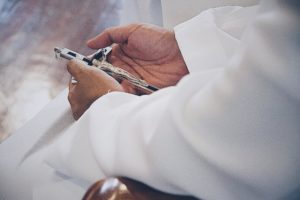
 

This threefold task is fundamental to the ministry of Jesus, and in the succeeding Sundays, we will listen to many of these actions. Why are these fundamental to Jesus? The answer is because these three aspects make Jesus’ ministry a holistic one. Teaching is to form a sound mind, to drive away evil spirits is to build a holy spiritual life, and healing is to empower our bodies. It is precisely the Good News because the salvation Jesus brings covers all aspects of our humanity. As His disciples, we are all called to preach, drive evil spirits, and to heal.


Healing deals with the health of our bodies. It is true that we do not have the gift of healing, but all are called to respect our bodies and thus, to live a healthy lifestyle and avoid those things that will make us sick, like unnecessary stress and unhealthy food. To respect our bodies flows from the recognition that our bodies are the gift of God and as St. Paul says, “the Temple of the Holy Spirit.” Thus, abuse of our bodies means disrespecting the God who created us, and the Holy Spirit who gives us life. Yet, healing is not limited to our bodies but also includes healing our neighbors. It is to make sure that our brothers and sister have something to eat, something to clothe their bodies and a place to rest their bodies. It is not only to heal our own bodies but our society as well.


Exorcism is truly a special ministry in the Church, and only delegated to few people under the authority of the bishops, but every Christian is called to drive away evil spirits in their lives and hearts. It is our sacred duty to live holy lives, to receive the sacraments frequently, and to pray fervently. These are the ways to get closer to God, and thus, enable us to have healthy spiritual lives. To drive away evils also means to free ourselves from the bondage of sins and vices. It is a kind of spiritual healing. The devil sometimes possesses our bodies, but most of the time, he possesses our hearts. Our excessive attachment to things, like money, sexual pleasure, prestige, is a manifestation of evil spirits working in our hearts.


It is true that not all are teachers by profession, but we are called to form our minds and other peoples’ mind as well. It is fundamental for the parents to teach the basic Christian values, like honesty, fidelity, and compassion, to their young children. It is also important to habitually reflect on our characters, to correct bad habits, and to improve ourselves. After all, education is not only transfer of information, but the formation of characters. Thus, a right understanding of self will affect the way we act. I have been faithfully attending the Eucharist since my childhood, but when I learn more about its theology, history and its rootedness in the Scriptures and Christ Himself, the more I fall in love with the Eucharist.


We are the disciples of Christ, and it is our sacred mission and honor to participate in His threefold ministry in our own ways and lives: to teach, to drive evil spirits and to heal.
Br. Valentinus Bayuhadi Ruseno, OP

(photo by Harry Setianto Sunaryo, SJ)

Come after Me!

Come after Me!

Third Sunday in Ordinary Time

(Feast of Sto. Niño in the Philippines)

January 21, 2018

Mark 1:16-20*


“Come after me, and I will make you fishers of men (Mar 1:17)”


Jesus begins His public ministry by calling His first disciples to follow Him. In ancient Palestine, to become a student of a particular teacher means to follow him wherever he goes and stays. In fact, the Greek words used is “deute hopiso”, that means “come after me” because the disciples are expected to literally walk few steps behind Jesus. No wonder, that when the four first disciples, Peter, Andrew, James and John, are called, they have to leave practically everything behind, their works, their family and their hometowns. Thus, to become Jesus’ disciples are a radical commitment that entails great sacrifices.
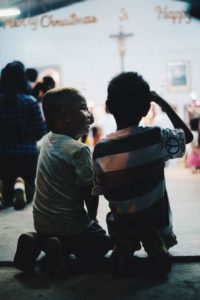
 

However, if we bring back the life of radical discipleship to our time, who among us will be able to follow that call? How many among us will be willing to leave behind our work, family, and hometown for the sake of Christ? Not many. Only a few people are entering the monasteries or the convents. Even, those who are already members of religious congregations, we are allowed to keep in touch with their family. I myself am able to have a vacation every year and visit my family. It seems that the total discipleship remains a far-reached ideal for many of us.


While it is true that this kind of life is genuinely difficult and rare, yet we believe that the life of a true disciple is also available for all of us. The Gospel tells us that the first disciples leave many things behind, but actually, the disciples do also bring something with them when they decide to walk after Jesus. They carry “themselves”, the totality of their own persons. Within this person are their characters, knowledge, skills, ideals, and dreams. In short, they also carry with them their profession, their family, and homeland. This is why Jesus does not only call Simon, Andrew, James, and John to follow Him, but He also is going to make them “the fishers of men.” Jesus knows that these guys are one of the best fishermen in the Galilee, and now Jesus invites them to offer the best they have for God’s purposes. To follow Jesus is not leaving everything behind as much as offering ourselves to the Lord.


When St. Dominic de Guzman preached against the heresy in the Southern French, he left the comfort of his church in Osma, Spain. Yet, when he preached, he brought along all the skills and knowledge he learned as a canon in Osma, and as a student at the University of Valencia. He left everything and yet, paradoxically, he brought everything when he founded the first religious Order that was dedicated for preaching in the Church.


We may not be able to leave our family, our profession, and hometown because we are responsible for the lives of our family and relatives, but with the same spirit, we can radically follow Jesus, by offering ourselves for God’s purposes. As parents in the family, what do we give to God, which may build a solid Christian family? As part of the Church, what do we surrender to Jesus, which may help her growth in the world? As members of society, what do we offer to the Lord, which may contribute to a just and growing society?


Today, the Church in the Philippines is celebrating the feast of Sto. Niño, or the Child Jesus. The image of Sto. Niño is the first to be introduced to the Filipino people, and His intercession has been very instrumental to the evangelization of this country. We pray to Sto. Niño that our self-offering may bear fruits wherever we are sent and live.


Br. Valentinus Bayuhadi Ruseno, OP

[photo by Harry Setianto Sunaryo SJ]


*the reading is taken from the 3rd Sunday of Ordinary Time

Come and Experience!

Come and Experience!

Second Sunday in the Ordinary Time
January 14, 2018
John 1:35-42

They said to him, “Rabbi, where are you staying?” He said to them, “Come and see.” (Jn 1:38-39)

In the Gospel of John, we will not discover the word “apostle” or one who is sent to preach the Gospel. John the Evangelist consistently calls those who faithfully gather around Jesus as the disciples. Why so? Perhaps, John the Evangelist wants to show us that the most important and fundamental aspect of being a follower of Jesus is truly to be a disciple.

What is a disciple in the time of Jesus? We usually understand a student as one who studies at a particular school with its buildings, facilities and system of learning. Like Br. Bayu is a student of the University of Santo Tomas, and every Monday to Friday, he has to attend classes at the Manila campus. I am expected to learn particular knowledge, like the theology of St. Paul or master certain skills like preaching. At the end of the semester, I need to pass the exams in order to prove that I have learned those set of knowledge or skills. If I fail, I have to take a remedial or retake the subject all over again. Surely, this is a simplistic way of imagining learning in our time, but if we want to be a disciple in the time of Jesus, we have to enter a different world.

When Andrew and Peter become the disciples of Jesus, it does not mean that they will attend lectures of Jesus. They literally follow Jesus wherever Jesus goes. That is why the first question Andrew asks is not how much the tuition fee is or what lesson Jesus will impart, but rather “Rabbi, where are you staying?” because it is clear in the mind of Andrew that if he wants to become a disciple, he has to follow Jesus literally for 24 hours a day, seven days a week. He is going to walk where Jesus goes, eat what Jesus eats, to sleep where Jesus lays His head, to experience what Jesus experiences, the joy, sadness, the suffering, and resurrection! Learning then is not simply about gaining knowledge or skills, but it is about sharing life, giving and receiving life.

It is interesting also to note that Jesus’ response to Andrew is oft-quoted “come and see”, yet in some ancient Greek manuscripts the words used are “erkesthe kai opheste”. If they are translated literally, it sounds like “come and experience!” To become a disciple is to experience the life of Jesus, to experience Jesus Himself. Surely, it is a total experience of Jesus. Thus, the end of learning is not the grades, but a new life in the likeness of Jesus, the Master. It is the imitation of Christ in the real sense.

However, to become this kind of disciple, the price is also extremely high. To follow and experience Jesus’ life, we need to give up our lives. A life for life. We cannot be the disciples of Jesus only 8 AM to 3 PM, but the rest of the day, we are free. We cannot say that we are disciples of Jesus when we are at the Church only, but not in the workplaces and homes. We become like Jesus both in good times and bad times. The questions now are: Are we willing to sacrifice our old lives? Are we ready to follow Jesus day and night? Are we making our full effort to become like Christ?

Br. Valentinus Bayuhadi Ruseno , OP

(photo by Harry Setianto Sunaryo SJ)

Translate »