Browsed by
Author: Romo Valentinus Bayuhadi Ruseno OP

The Tale of Two Mothers

The Tale of Two Mothers

Fourth Sunday of Advent

December 23, 2018

Luke 1: 46-56


“Blessed are you who believed that what was spoken to you by the Lord would be fulfilled.”

(Lk. 1:45)


Today’s Gospel is truly beautiful. We have two protagonists. They are women, and they are both pregnant. Who are they? Mary and Elizabeth. Yet, why is the story beautiful? It is just natural for women to get pregnant. Unless we need to go closer to the stories and place ourselves in the shoes of Mary and Elisabeth, we can never see the true beauty of their story.

First, Mary, she is young, and at the same time, she is pregnant with no husband. St. Joseph is indeed the husband of Mary, but he is not the father of the baby. Perhaps, in our time, if a woman gets pregnant and yet without a husband, this is an unfortunate event, but life goes on for both the woman and child. however, if we go back to the time of Mary, way back two thousand years ago, that woman would be a great disgrace her family and community. She would be expelled from the community, and sometimes, they would be also stoned to death. Mary understands that when she accepts the will of God, to be the mother of Jesus, she faces death. Indeed, death is the future of Mary.

Second, Elizabeth. Elizabeth has a husband, so nobody will stone her, but her situation is also difficult. She is too old to get pregnant. Once I asked my medical doctor-friends, why is it risky to get pregnant if you are old? One said that as we grow old, so does our body and our muscles. With weaker muscles, a mother will have a difficult time during the process of giving birth, and this can be very dangerous to the baby and the mother.  I said further, why not caesarian? They said that it is also difficult if not deadly. As we grow old, our hearts weaken. If we place ourselves under the knife, with weaker hearts, there is a big possibility that we will not wake up. Like Mary, death may be the future of Elizabeth.

If Mary and Elizabeth know that it is dangerous and even deadly to be pregnant, why are they still following the will of the Lord?

The answer is at the very name of Elizabeth and her husband Zechariah. Zachariah is from the Hebrew word “Zakar”, meaning to remember. Meanwhile, Elizabeth is formed two Hebrew words, Eli and Sabbath, meaning God’s oath or promise. So if we combine the two names, Zachariah-Elizabeth, they mean “God remembers His promise” or “God fulfills His promise.”

Elizabeth knows it is deadly to have John in her womb, but she still follows the will of God, because she is aware the baby was a fulfillment of God’s promise. Mary from Nazareth, the north part of Israel, travels to Judea, the south of Israel, in haste. But, why in haste? Mary is excited, and she wishes to witness how God fulfills His promise to Elizabeth. The moment Mary sees Elizabeth; she knows that the baby inside her womb is also a fulfillment of God’s promise.

Every child, indeed every on us is the fulfillment of God’s promise. Mary and Elizabeth never see the babies in their wombs as mere inconveniences in their lives or unplanned garbage that can be disposed of. Yet, to accept these babies as gifts of God, Mary and Elizabeth have to be courageous because they are going to sacrifice a lot including their own lives. Elizabeth and Mary are brave women and mothers.

The questions are for us: Who among us is not coming from a woman’s womb? We are all here because of a mother. Indeed, not all mothers are perfect. Some of them are not rich, some are having attitude problems, some are not good examples. Yet, the mere fact we are here now, one woman in our life, against all odds, has decided to courageously accept us as a gift, as the fulfillment of God’s promise. To all mothers, thank you very much.


Deacon Valentinus Bayuhadi Ruseno, OP
Broken Enough

Broken Enough

Third Sunday of Advent

December 16, 2018

Luke 3:10-18


The second question that Archbishop Socrates Villegas of Lingayen-Dagupan asked us during our ordination was, “Are you broken enough?” Once again his question raised eyebrows and was, indeed, counter-intuitive. We want to be flawless, whole and perfect. We desire to achieve more in life, to be wealthy, healthy and pretty. We wish to be socially accepted, respected and gain certain prominence. We want to become somebody, and not nobody. We like others to call us as the famous doctors, the creative entrepreneurs, or successful lawyers. Or for us, people in the Church, we like people to consider us well-sought preachers, generous and builder-priests, or skillful and well-educated sisters.
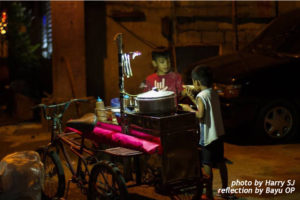
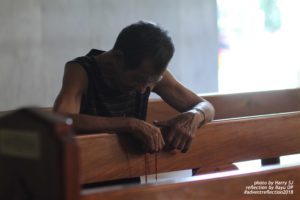
However, we often forget that the people we serve are broken people. They are broken in many aspects of life. Some are broken financially, some are struggling with health problems, and many are crushed by traumatic experiences in the families. Some are dealing with anger and emotional instability, and some are confronting depression and despair. Some are hurt, and some other are forced to hurt. Many fall victims to injustice and violations of human rights. And all of us are broken by sin. We are serving broken people, and unless we are broken enough like them, our ministry is nothing but superficial and even hypocritical.

Therefore, as the ministers of the Church, we ask ourselves: are we disciplined enough in our study and allow the demands of academic life to push us hard to kiss the ground and continually beg the Truth to enlighten us? Are we patient enough in our life in the community and allow different personalities and conflicts in the seminary, convent or community to shape us up, to make us realize that life is much bigger than ourselves, and to enrich us? Are we resilient enough in our ministry and allow different people in our ministries to challenge our small world, to confront us with failures, and to face a reality that it is not them being served, but us? Are we humble enough in our prayer and allow God to take control of our lives?

In the center of our Eucharistic liturgy are the Word and the Body being broken. The Word of God in the scriptures is read, and the preacher ‘stretches’ and ‘breaks’ it into more relevant and meaningful words for the people of God. The Body of Christ in the consecrated hosts is literally broken, and so this may be enough for everyone. These Word and Body of Christ are broken for the broken people of God. Jesus saves and makes us holy by being one with us, by being broken for us. He is a broken Lord for His broken brothers and sisters.

We the ministers of God are like Jesus Christ, and thus, the questions are: Are we willing to recognize and accept our own imperfections? Are we strong enough to admit that we are weak? Are broken enough that we may share our total selves to our brothers and sisters? Are we like Christ who is broken for others to live?


Deacon Valentinus Bayuhadi Ruseno, OP

Weak Enough

Weak Enough


Second Sunday of Advent

December 9, 2018

Luke 3:1-6

During my ordination, Archbishop Socrates Villegas of Lingayen-Dagupan asked this question to us who would receive the sacred order, “Are you weak enough?” The question was mind-blogging and unexpected because often we have strength, power, and talents as our favorite subjects, and even obsession. We like to show to the world that we are achievers and conquerors. We parade our good education, high-earning job, or a beautiful face. The ‘superior’ mentality does not only affect the lay people traversing in the ordinary world, but also people dressed in white walking through the corridors of the Church. The clergy, as well as religious men and women, are not immune to this hunger for approval and sense of worthiness.

I have to admit also that our formation in the religious life is colored with this kind of ‘spirit.’ The study is important in our Dominican tradition, and we are struggling to meet the academic demands of philosophy and theology. Those who are excelling are honored, but those who are falling, are facing expulsion. Prayer and community life are basic in our spirituality, and we are living to meet the expectations in the seminary or convent, like regular prayers and various community activities. Those who meet the standards may pass the evaluation for ordination or religious profession, but those who are often late or absent, are deemed to have no vocation. Preaching is our name, and we give our all in our ministries. Those who are successful in their apostolate are exemplary, but those who are not able to deliver a good speech may wonder whether they are in the Order or ‘out of order.’

The ordination is for the worthy ones, meaning for those who ace all the requirements. However, the good archbishop reminds us that relying too much on our strength and goodness, we may hamper the work of God in us. When we become too handsome, the people begin focusing on us, rather than the beauty of the liturgy. When we preach too brilliantly, the people start admiring us rather than the Truth of the Word. When we teach too brightly, we outshine the Wisdom made flesh. We forget that all power  and talents we have, belong to God, not ours. What we have, are weaknesses.

However, it is only in our weakness that God’s strength is shining brightly. He called Moses who was a murderer and a fugitive, to liberate Israel from the slavery. He called Jonah, a reluctant prophet, to save Nineveh. He chose Simon Peter, who betrayed Jesus, to be the leader of His Church. He appointed Paul, the Pharisee and the persecutor of Christians, to be the greatest apostle. He elected Mary, a poor and insignificant young woman, to be the mother of God.  Are we weak enough to allow God’s strength working in us? Are we enough to allow God’s beauty shining through us? Are we weak enough to let other people see God’s wisdom in us? Are we strong enough to admit that we are weak?

Deacon Valentinus Bayuhadi Ruseno, OP

The Tale of Two Kings

The Tale of Two Kings

The solemnity of Christ the King

November 25, 2018

John 18:33-37


“You say I am a king. For this I was born and for this I came into the world, to testify to the truth. Everyone who belongs to the truth listens to my voice (John 18:37).”


Our Liturgical Year ends with a drama of two kings: Pilate and Jesus. Pilate was representing the superpower nation in those times, the Roman Empire. So massive in its military domination and so ruthless in its conquests are Rome with her mighty legions. Kingdoms bent their knees in homage to Caesar, the king of kings. Pilate embodied this culture of intimidation and violence. He was a notoriously brutal leader, who stole from his subjects and executed people even without a trial. Surely, he thought of himself as the powerful ‘king’ of Jerusalem and anyone who stood on his way, would be destroyed.

We are constantly tempted to belong to this kingdom. A husband refuses to listen to his wife and forces his wills in the family through his physical superiority. Insecure with themselves, bigger and tougher guys bully the smaller and weaker kids in a school. Sadly, it takes place not only in school but almost everywhere: family, workplace, society and even cyberspace. The boss intimidates his employees. The government leaders violently suppress any critical voices no matter correct they may be. In the height of his dictatorship, Joseph Stalin bullied the Church saying, “How many division of tank does the Pope have?” Machiavelli, an Italian philosopher, even once concluded that the orderly society is built upon fear and violence.

However, we have Jesus, the King. But, what kind of king he is? If He is a king, why does he never put on any royal crown, except the crown of thorns forcefully embedded on his head (Mat 27:29)? If He is a king, why does he have no imperial throne except the germ-plagued manger of Bethlehem and the ghastly wood of the cross (Luk 2:7 and Mark 15:30)? If He is a king, why does he control no formidable army, except the disbanded group of naïve followers: one of them sold him for 30 pieces of silver, a price of a slave, another denied Him for three times and the rest ran for their lives? Is Jesus really a king?

Reading our today’s Gospel closely, Jesus says that His kingdom is not of this world. This means that His kingdom does not conform to the standards of this world. It is not built upon military power, forceful domination, or bloody war. Thus, He is king with no golden crown, and his kingdom has no single army. Jesus further reveals that He comes to testify to the truth (John 18:37), and indeed, He is the Truth Himself (John 14:6). He is the king that rules the kingdom of truth, and his subjects are those listen and witness to the truth. His is the Kingdom that turns upside down the values of the earthly kingdom. It is not built upon deceit, coercion, or clever political maneuvers, but upon mercy, justice and honesty. It embodies the genuine love for others even the enemies, service to everyone especially to the poor, and true worship of God.

At the end of the liturgical year, it is providential that the Church chooses this reading for us to contemplate. From the entire liturgical year, we come to the Church and listen to the scriptural readings especially the Gospel. We listen to Jesus Himself, and we are confronted with various aspects of this one Truth. Now, it is time for us to decide whether we become part of the kingdom of Pilate, or we listen to the Truth and follow Jesus.


Br. Valentinus Bayuhadi Ruseno, OP

The Little Apocalypse

The Little Apocalypse

Reflection on the 33rd Sunday in Ordinary Time

November 18, 2018

Mark 13:24-32


…they will see ‘the Son of Man coming in the clouds’ with great power and glory… (Mk. 13:26)

The last book of the Bible is called the Book of Apocalypse. The Greek word “ apokalopsis ” means unveiling or revelation.  Thus, the 27th book of the New Testament is also known as the Book of Revelation. It is recognized as an “apocalypse” literature because the book unveils the future events, and usually, these are dramatic happenings at the end of the world. Our Gospel this Sunday is taken from Mark chapter 13, and this chapter is also known as the little “Apocalypse.”

Mark 13 speaks about the coming of the Son of Man. But, reading closely, we discover some distressing and even horrifying events that precede this glorious coming. The Temple of Jerusalem will be demolished, Jesus’ followers will endure severe persecution, and the sun, the moon, and other celestial bodies begin crumbling. This generation will be a terrible time to live.

For modern readers like us, our Gospel today does not sound optimistic at all. In fact, we may question whether it is a Good News of salvation or a nightmarish story that scares little children? For many of us who attend the Sunday mass faithfully, we listen to this little apocalypse at the end of every Church’s liturgical year. Thus, as we have heard it year after year, the story has lost its teeth, and we no longer pay attention to its details. After all, we are still alive and kicking.

However, the apocalypse literature has a different impact and meaning for the first Christians, the original readers of the Gospel of Mark. For the early Church, the apocalypse does not mean to be a horror story, but rather a message of hope.  The early Christians were a tiny minority in the vast Roman empire. Because they were firm in their conviction to worship one God, and refuse to worship Caesars and the Roman gods, they were continually subjects of harassment, persecution and even martyrdom. One of the most brutal persecutions of Christians was under the order of Emperor Nero. He blamed Christians for the fire that consumed parts of the City of Rome. He ordered Christians to be arrested and tortured. Some were fed to the wild beasts. Some were eaten by the hungry dogs. Others were burned at stick to light up the City at night.  In this time of desperation, Mark chapter 13 gave them the Gospel of hope. No matter what happened to Christians, whether it is discrimination, persecution, disaster, or even the end of the world, we are assured that it is God who is in control; He has the final word.

The mere fact we can read this reflection means that we are living in a much better time compared to the persecuted Christians. However, the message of the apocalyptic literature remains true to us and all Jesus’ followers through the ages. Facing daily challenges and toils, unexpected and unfortunate events, and various problems and complexities, we tend to shrink to ourselves, to be frustrated, and lose hope. More and more young people easily get depressed, and some, unfortunately, decide to end their lives. This happens, I believe, because we no longer know how to hope. In his book, Crossing the Threshold of Hope, St. John Paul II was asked whether the holy pope ever doubted his relationship with God, especially in these periods of trouble and difficulty. As a man of hope, his answer was simple yet powerful, “Be not afraid!” The Church should be the school that teaches her children to dare to hope, even hope against all hope, because in the end, God has the final word, and we should not be afraid.


Br. Valentinus Bayuhadi Ruseno, OP

Translate »