Browsed by
Author: Romo Valentinus Bayuhadi Ruseno OP

Woman of Faith

Woman of Faith

Thirteenth Sunday in Ordinary Time

July 1, 2018

Mark 5:21-43


“Daughter, your faith has saved you. Go in peace and be cured of your affliction.” (Mk. 5:34)


Today’s Gospel seems to be just another healing miracles of Jesus, but if we read it closely, the story of the healing of the woman with hemorrhage is extraordinary tale of faith. We are not sure what kind of hemorrhage she suffers, but the fact that she bears the sickness for 12 years, spends a lot for the medication, and does not get any better, means it is pretty serious, if not terminal. During this time, the physicians are extremely rare, and expectedly, the patients need to spend a lot of money. The woman may come from a wealthy family, but she is impoverished because her prolong sickness. The woman is losing her life and facing despair. I am currently assigned as an associate chaplain in one of the hospitals in Metro Manila, and my duty is to make pastoral visit to these patients. I encounter some patients who are suffering from certain health conditions that drain all their resources, and it seems the situation does not get any better. I realize the story of the woman with hemorrhage is not only her story happened in the far past, but it is also our stories here and now.


We must not forget that our protagonist is also a woman. Being a woman in the time of Jesus means being a second-class citizen in a patriarchal society and often, they are considered as mere properties of the husbands or the fathers. Generally, while the men work outside and socialize, women are expected to stay at home, and function as the housekeepers and babysitters. Normally, they are not allowed to communicate with the outsiders, especially men, except under the supervision of their husbands or fathers. Our protagonist is also having chronic hemorrhage, and this means she is ritually unclean, and those who are in contact with her shall be made unclean as well (Lv. 15:19).


The woman with hemorrhage has faith in Jesus and wants to be healed, yet to do that, she has to challenge the cultural norms that bind her. She traverses into greater danger. What if she is not healed? What if she makes Jesus and His disciples unclean? What if she will be branded as a shameless woman by the society? Shame restrains her, but faith propels her. Thus, she takes a ‘win-win’ approach. She tries to reach Jesus’ cloth, and she makes sure that she will not establish any contact with Jesus. Miracle happens, and she is healed. Yet, unfortunately, Jesus finds her. In tremble and fear, she fells down before Jesus and confesses. She is afraid not only because she “snatches” the power from Jesus, but because she has broken the standing cultural norms and the Law of Moses. However, Jesus’ response surprises his disciples and all who witness the event. Instead of castigating her for culturally improper behavior, Jesus praises her faith, “Daughter your faith has saved you.”


Indeed it is her faith that makes her a proactive protagonist of this particular story. She refuses to succumb to despair and makes her way all the way to Jesus. We notice most of the actions in this story is performed by the woman, and Jesus is there to affirm her. Rightly, Jesus calls her “daughter” acknowledging her also as the descendants of Abraham, the father of great faith. The story of a woman of hemorrhage is a journey of a woman of faith. It is a faith that grows even in the midst of hopeless situations of sickness, financial crisis, and uncertain future. It is a faith that thrives in the middle of human limitations, and transcend cultural boundaries. It is a faith that moves a mountain.


Br. Valentinus Bayuhadi Ruseno, OP
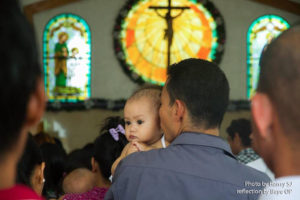
A Child as a Gift

A Child as a Gift

Solemnity of the Nativity of John the Baptist

June 24, 2018

Luke 1:57-66, 80


“The Lord had shown his great mercy toward her, and they rejoiced with her.” (Lk. 1:58)


Today we are celebrating the birth of John the Baptist. Two figures emerge as the protagonists of our today’s Gospel, Elizabeth, and Zachariah. Luke describes the couple as “righteous in the eyes of God, observing all the commandments and ordinances of the Lord blamelessly. (Luk 1:6)”. But, they have no child. The possibility to have a child is close to zero as Elizabeth is perceived to be barren and Zachariah is already old. In ancient Jewish society, children are considered to be a blessing of the Lord and a source of honor, and barrenness is a curse and shame.


However, the archangel Gabriel appears to Zachariah and tells him that his wife will get pregnant despite her barrenness and his advanced age. Paying close attention to their names, we may discover even richer meaning. Zachariah, from the Hebrew word “Zakar” means to remember, and Elizabeth, a compound Hebrew words, “Eli,” and “Sabath” means God’s oath or promise. Thus, both names may mean God remembers His promise. In the Bible, when God remembers, it does simply mean God recalls something from memory, but it means God fulfills what He has promised. As God has fulfilled His promise to Zachariah’s ancestors, so God also remembers His promise to Elizabeth. The story of Elizabeth reverberate the stories of great women in the Old Testament: Sarah (Gen 15:3; 16:1), Rebekah (Gen 25:21), Rachel (Gen 29:31; 30:1), the mother of Samson and wife of Manoah (Jdg 13:2-3), and Hannah (1Sa 1:2).


What is God’s promise to Elizabeth and Zachariah, and eventually to all of us? St. Luke the evangelist points to us that God’s promise is to show His great mercy to Elisabeth and Zachariah (see Luk 1:58). The birth of John the Baptist is a sign of God’s mercy towards the righteous couple. Thus, the birth of every child is a sign of God’s promise fulfilled, a sign of God’s mercy to every parent. We recall that mercy is not something we deserve. Mercy is the embodiment of gratuitous love, the gift of love. Mercy is an utter gift. Through every child, God shows His great mercy to us, and together with Elizabeth and Zachariah, we shall rejoice because of this gift.


We are living in the world that is increasingly uncomfortable with the presence of the little children around us. There is this new fundamentalist mentality creeping into millennial generation. It is a mentality that promotes individual success as the prime and absolute value of happiness. Thus, anything that stands in its way has to be eradicated. This includes marriage, family life and finally children. They are no longer seen as a gift to be received with gratitude, but liabilities to be avoided. When I visited South Korea last year, my Dominican Korean friend told me that young generation of Korea is working very hard to the point that they longer consider marriage and having children as their priorities. Indeed, unlike in the Philippines or Indonesia, it was not easy to spot little children playing freely. I guess the decline in population growth is a problem in many progressive countries.


We deny neither the fact that it is a backbreaking responsibility to raise children nor the reality that not all of us are called to become parents. However, it is also true that children are a gift not only to the particular family, but to the entire humanity, and thus, every one of us has the sacred call to protect and take care of the wellbeing of our children. We shall protect our children from any form of child abuse, from the debilitating effects of poverty, from the egocentric and contraceptive mentality and from evil of abortion. To honor a gift is to honor the giver, and thus, to honor every child is to honor the God who gives them to us.


Br. Valentinus Bayuhadi Ruseno, OP


The Death of Priesthood

The Death of Priesthood

(a reflection of a religious brother for three Filipino priests who recently martyred)

June 17, 2018


The Catholic Church in the Philippines is once again in profound grief after one of her priests was mercilessly murdered. Fr. Richmond Nilo, from the diocese of Cabanatuan was shot several times just before he celebrated the mass at a chapel in Zaragoza, Nueva Ecija. His body was laying on the floor at the foot of the image of Blessed Virgin, soaked with blood. Another disturbing and painful image. He becomes the third priest losing his life in a bloody attack in the past six months. On December 4, 2017, Fr. Marcelito Paez was ambushed in Jean, Nueva Ecija. Just a few weeks ago on April 29, Fr. Mark Ventura was also gunned down moment after celebrating the mass. We may also include Fr. Rey Urmeneta who was attacked by a hit man in Calamba, Laguna. He sustained a bullet in his body, yet he survived death.


Several weeks ago I wrote an emotional reflection on the death of Fr. Ventura (see “A Death of Priest) and I would never hope that I would write another one. Yet, just sometime after the priest was buried without justice being served, Fr. Nilo lost his life in the line of duty. Surely, this is not the first time a priest is killed in the Philippines. The history has witnessed the killing of both Filipino and foreign priests in this land, but to lose three lives in just six months is truly alarming. I was asking myself, “Are we now living in the perilous time for priests? Is to become a priest a dangerous vocation? What’s the point of becoming a priest if it brings nothing but persecution and death?” We have left everything for Christ, our family, our future. Should we give up our lives in this heinous manner as well?


These questions are valid, yet these questions also, I realize, spring from fear. Many priests and even seminarians, myself included, have lived in the comfort of our seminaries, parishes or convents. Provided with readily available basic necessities, with individual rooms, with good-quality education, with other facilities and even amenities, we are actually living as middle-class bachelors. These privileges are meant to make us better and well-formed priests for the service of the people, but getting used to these facilities, we often lose sight of their primary purpose. Our priesthood is called as the ministerial priesthood because the ordained priests are to serve the people of God, but sometimes, the priests end up being served by the people of God. At times, the virus of clericalism and careerism infect our minds. Ordinations and positions in the Church are seen as promotions, career, or prestige. A better position means better perks! If the priesthood is just another way to make us rich, we have lost the priesthood even before we die! The death of a priest is terrible sorrow, but the death of priesthood in our hearts is tragedy!


Bishop Pablo David, DD of Caloocan, Metro Manila, reminds seminarians who are aspiring to become priests, that if the deaths of the priests gave them discouragement, rather than inspiration, it is better for them to forget the priesthood and leave the seminary as soon as they can. Bishop David notes that they are not helpless victims, but rather martyrs that bravely choose to face the dangerous consequence of preaching the Gospel and working for justice.


Since the beginning of Christianity, to become Christians and especially priests are dangerous vocations because we follow Christ in His way of the Cross. Yet, the martyrdom of the three priests turns out to be a shock therapy that wakes us up from our comfortable slumber. It is a call for many of us, seminarians, religious, and priests to ask what the purpose of our priesthood is. Have we died every day to ourselves? Are we ready to give up our lives to God and His people? Are we ready to follow Christ till the end?


Br. Valentinus Bayuhadi Ruseno, OP

Kata

Kata

Sabtu dalam Pekan Biasa ke-10

16 Juni 2018

Matius 5:33-37


Mengucapkan sebuah kata adalah sebuah tindakan yang penuh daya. Dalam Kitab Kejadian, Allah menciptakan alam semesta melalui firman-Nya, “Jadilah terang!” Dan setelah ia selesai dengan penciptaan, Allah membagikan kekuatan kreatif ini dengan Adam dengan menugaskan dia untuk memberi nama makhluk-makhluk ciptaan lainya. Adam kemudian menjadi ‘rekan pencipta’ dengan membawa makhluk-makhluk lain ke dalam cahaya dan harmoni: untuk membedakan siang dari malam, cahaya dari kegelapan, dan kebenaran dari kepalsuan. Melalui kata juga, kita menjalin hubungan dengan satu sama lain dan membangun keluarga dan komunitas. Melalui kata “Ya, saya bersedia”, sang mempelai pria dan wanita menjadi satu tubuh dan membangun keluarga Kristiani.

Namun, kata ini tidak hanya kuat untuk membangun tetapi juga menghancurkan. Adolph Hitler adalah salah satu orator terbaik dalam sejarah dunia, tetapi dia menggunakan kata-katanya untuk menyebarkan kebencian ke dalam hati bangsanya, dan ini menyebabkan Perang Dunia II yang mengerikan, dan hilangnya nyawa jutaan orang.

Kata Yesus sungguh penuh kuat. Tetapi, kekuatannya tidak bergantung pada kekerasan, ancaman atau penipuan, tetapi kebenaran dan belas kasih. Itu adalah kata yang menyembuhkan ketika dia berkata kepada orang yang tuli di Galilea, “Efata! Terbukalah!” Ini adalah kata yang mengampuni ketika dia memberi berkata kepada wanita yang berdosa itu,“Pergilah dalam damai! Dosa Anda telah diampuni. ”Ini adalah kata yang membawa pertobatan ketika ia mengundang Matius, “Ikutlah Aku!” Ini adalah firman yang membawa kehidupan ketika ia membangkitkan Lazarus,“ Lazarus! Marilah ke luar!” Ini adalah kata yang mengubah dan menyelamatkan manusia ketika menghadapi pengkhianatan, penyangkalan dan kematian, Dia memberikan dirinya kepada teman-temannya, “Inilah tubuh-Ku yang diserahkan bagi kamu!”

Kita, para pengikut Kristus, diundang oleh sang Guru dan Tuhan untuk mengucapkan kata-kata yang membangun komunitas dan keluarga, yang menyembuhkan luka-luka, yang membawa kedamaian, dan yang membebaskan kebenaran. “Jika ya, hendaklah kamu katakan: ya, jika tidak, hendaklah kamu katakan: tidak!”


Frater Valentinus Bayuhadi Ruseno, OP

Pernikahan di Era Digital

Pernikahan di Era Digital

Jumat dalam Masa Biasa ke-10

15 Juni 2018

Matius 5:27-32


Kita hidup di tengah-tengah masyarakat yang sangat canggih dengan semua kemajuan teknologi dan ilmiah. Namun, dengan segala kamajuan yang kita nikmati, kita tetap saja bergulat dengan permasalah di dalam pernikahan dan tidak dapat berdamai dengan diri kita sendiri dan pasangan hidup kita. Pernikahan menghadapi jalan bergelombang, dan terkadang jalan buntu. Pasangan menemukan kehidupan mereka tidak bahagia dan penuh masalah. Ada saatnya, terjadi kekerasan verbal, emosional dan fisik. Perselingkuhan ternyata menjadi godaan besar bahkan untuk pasangan bahagia. Tak heran jika suami dan istri akhirnya menemukan perpisahan, deklarasi pembatalan nikah, dan bercerai sebagai solusi instan. Generasi muda menemukan hidup penikahan tidak lagi relevan dan lebih memilih untuk tinggal bersama tanpa komitmen permanen. Beberapa umat Kristiani pun memilih menikah sipil, berpikir bahwa pernikahan di Gereja membawa kerumitan besar dan beban keuangan.

Hal Ini tidaklah mengejutkan, dan pola pikir digital kita  memberikan kontribusi juga pada semakin ruwetnya permasalahan dalam pernikahan saat ini. Paus Francis dalam Seruan Apostoliknya, Evangelii Gaudium, menulis, “Kadang-kadang kita tergoda untuk mencari alasan dan mengeluh, bertindak seolah-olah kita hanya bisa bahagia jika seribu kondisi dipenuhi. Hal ini karena ‘masyarakat teknologi’ kita telah berhasil mengandakan kesempatan meraih kenikmatan, namun telah menemukan sangat sulit untuk menemukan sukacita sejati (# 7).” Kita langsung beralih saluran TV  ketika kita merasa bosan. Kita ketagihan untuk ‘Like’ dan ‘comments’ di Facebook. ‘Friend’ dan ‘Unfriend’ menjadi kosa kata baru. Kita selalu dalam perlombaan untuk gadget terbaru dan membuang model usang meskipun pada kenyataannya mereka masih berfungsi dengan baik.

Yesus tidak menawarkan solusi instan untuk permasalahan dalam pernikahan kita. Bahkan, Dia menegaskan kembali bahwa percerai bukanlah kehendak Allah. Dia bahkan mengkritik sikap instan orang-orang Farisi. Yesus tampaknya agak kejam terhadap orang-orang yang menghadapi begitu banyak masalah pernikahan. Namun, Yesus tahu bahwa pernikahan dan komitmen adalah sebuah panggilan bagi sebuah pilihan radikal untuk mencintai. Sebagai Pencipta kita, Dia menyadari bahwa kita mampu untuk pemberian diri yang radikal. Kita menjalin sebuah pernikahan tidak untuk menghasilkan banyak kenikmatan belaka, tetapi untuk menemukan sukacita sejati bahkan di tengah-tengah masalah dan penderitaan. Kita diciptakan bukan untuk sekedar kontrak sempetara, tetapi perjanjian abadi.

Yesus mengajak kita untuk mengubah sikap kita dan perspektif dalam hidup dan pernikahan suci, dan menyesuaikan diri dengan kehendak Tuhan. Dan ini dimulai dengan hal-hal sederhana. Ini berarti akan melawan budaya gratifikasi instan, dan bersikap kritis dengan pola pikir teknologi kita. Ini berarti membuat usaha ekstra dalam membangun dan mempertahankan persahabatan, dan jangan terburu-buru untuk mengakhirinya saat situasi mulai sulit. Ini berarti menikmati apa yang kita telah miliki seberapapun kecilnya. Ini berarti tekun dalam karya yang sulit namun bermakna, dan menghargai orang lain yang telah memberikan kontribusi positif untuk hidup kita, tidak peduli seberapa kecilnya. Ini mungkin langkah-langkah kecil, tapi saat ketekunan dan komitmen telah menjadi kebiasaan kita, pencarian bagi keindahan  dan kebahagian dalam pernikahan dan kehidupan akan datang secara alamiah. Kemudian, kita menyadari Yesus tidak salah untuk menegakkan hokum Tuhan bahwa pernikahan sejati tidaklah terceraikan.

Kita juga berdoa bagi pasangan suami-istri yang sedang menghadapi badai kehidupan.


Frater Valentinus Bayuhadi Ruseno, OP

Translate »